
What Are Fat Metabolism Peptides?
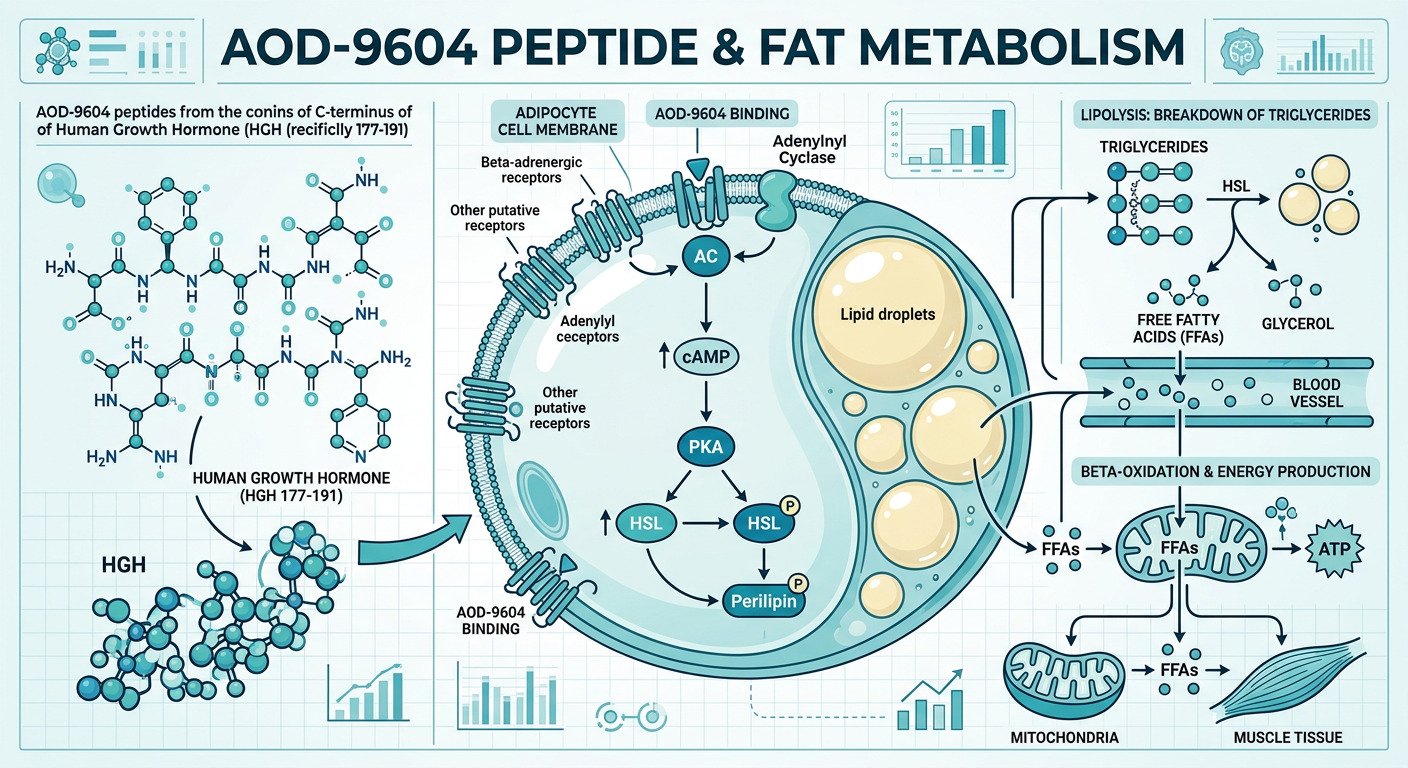
Fat metabolism peptides are a class of short amino acid chains studied for their potential influence on how the body stores and breaks down fat. Many of these peptides are derived from fragments of larger proteins involved in growth and metabolism, which has led researchers to explore their effects on weight regulation.
The balance between fat storage and fat breakdown is controlled by complex hormonal and metabolic pathways. Peptides that interact with these systems have drawn scientific interest for their potential to support healthy body composition.
How Fat Metabolism Peptides Are Believed to Work
Research suggests that fat metabolism peptides may influence weight regulation through several mechanisms:
- Stimulating lipolysis: These peptides may encourage the breakdown of stored fat, releasing fatty acids for the body to use as energy.
- Inhibiting lipogenesis: Some fat metabolism peptides may reduce the formation of new fat deposits, potentially helping to limit weight gain.
- Targeted action: Because many of these peptides are derived from specific protein fragments, they may act on particular metabolic pathways without affecting others.
What Research Has Found
Studies on fat metabolism peptides have explored their potential effects on:
- Fat loss and body composition
- Obesity and weight management
- Metabolic health markers
While some findings are encouraging, human clinical results have been limited. More research is needed to fully understand the effects, safety, and appropriate applications of fat metabolism peptides in humans.
Current Status
Fat metabolism peptides are not approved by the U.S. Food and Drug Administration (FDA) or the European Medicines Agency (EMA) as medical treatments for weight loss. They are primarily available for research purposes. The legal status of these compounds varies by country, and individuals should be aware of the regulations in their jurisdiction.
Key Takeaways
- Fat metabolism peptides are studied for their potential to influence fat storage and breakdown.
- They are believed to work by stimulating lipolysis and inhibiting lipogenesis.
- Research has explored their effects on fat loss and obesity, with limited human results.
- They are not approved medical treatments in the USA or EU.
- Anyone considering peptides should consult a qualified healthcare professional.
This article is for educational purposes only and does not constitute medical advice. See our Disclaimer for more information.