
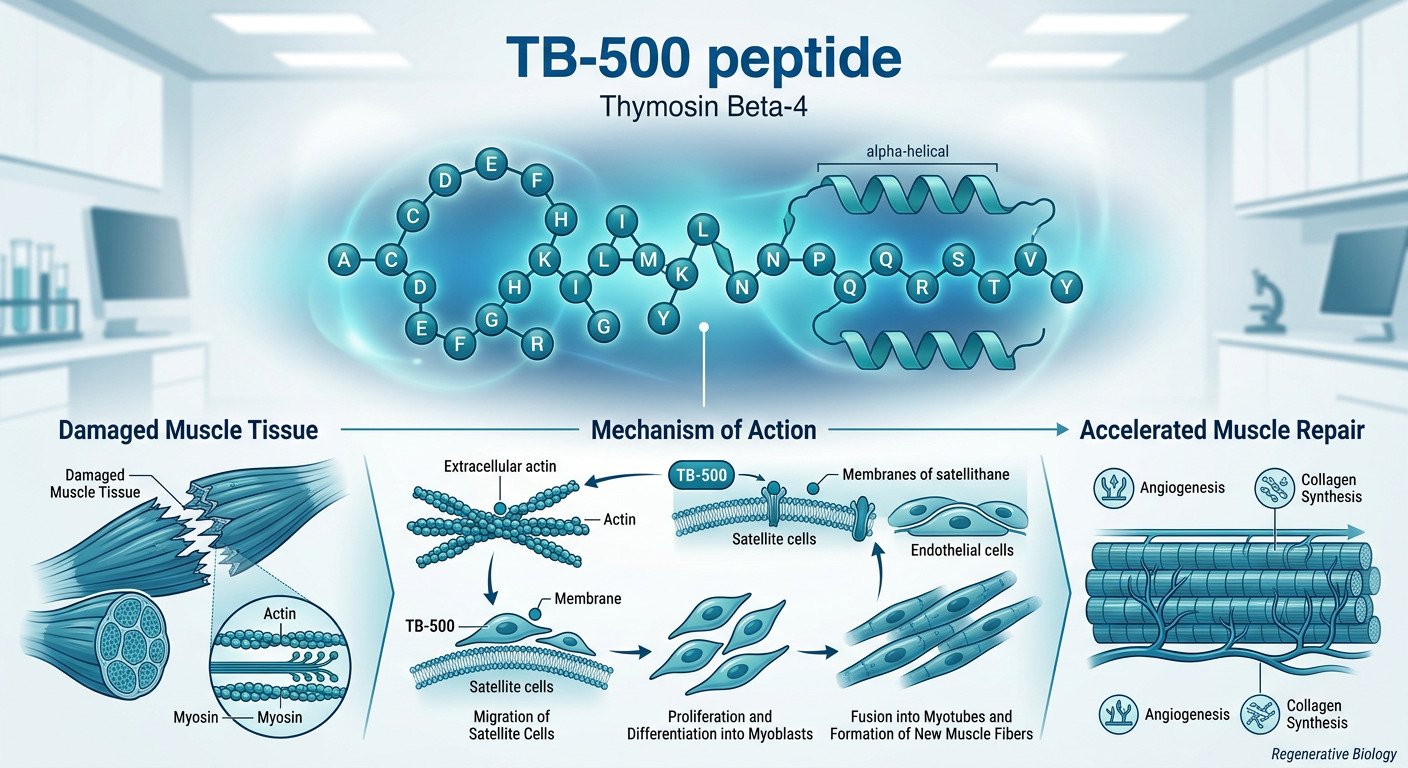
Overview of Recovery Peptides
Recovery peptides are a class of short amino acid chains that have been studied for their potential to support muscle recovery and tissue repair. Researchers have investigated several peptides in this category for their observed effects on cellular repair processes, particularly following injury or intense physical exertion.
These peptides have drawn scientific attention because they appear to influence the way cells migrate, organize, and rebuild damaged tissue. This has led to interest in their potential applications in sports medicine, cardiology, and general wound care.
How Recovery Peptides Are Believed to Work
Research suggests that recovery peptides may promote healing through several mechanisms:
- Cell migration: Certain recovery peptides may encourage cells to move toward sites of injury, which is essential for tissue repair.
- Tissue remodeling: They may help reorganize the extracellular matrix, supporting the rebuilding of healthy tissue structure.
- Reducing inflammation: Several recovery peptides appear to modulate inflammatory signaling, potentially limiting secondary damage after injury.
- Actin interaction: Some recovery peptides interact with actin, a protein central to cell movement and structural integrity, which may explain their effects on tissue repair.
What Research Has Found
Most studies on recovery peptides have been conducted in animal models. Research has explored their potential effects on:
- Muscle recovery after injury
- Cardiovascular health and heart tissue repair
- General wound healing
- Tissue regeneration in connective structures
While these findings are encouraging, it is important to note that robust human clinical trials remain limited. More research is needed to fully understand the effects, safety, and appropriate applications of recovery peptides in humans.
Current Status
Recovery peptides are not approved by the U.S. Food and Drug Administration (FDA) or the European Medicines Agency (EMA) as medical treatments. They are primarily available for research purposes. The legal status of these compounds varies by country, and individuals should be aware of the regulations in their jurisdiction.
Key Takeaways
- Recovery peptides are short amino acid chains studied for their potential to support muscle and tissue repair.
- They are believed to work through cell migration, tissue remodeling, and inflammation reduction.
- Most research has been conducted in animal models, with limited human trials.
- They are not approved medical treatments in the USA or EU.
- Anyone considering peptides should consult a qualified healthcare professional.
This article is for educational purposes only and does not constitute medical advice. See our Disclaimer for more information.