
What Are Pigmentation-Related Peptides?
Pigmentation-related peptides are a class of short amino acid chains that have been studied for their potential influence on skin color and tanning responses. Researchers have investigated these peptides for their interactions with the body's natural pigmentation pathways.
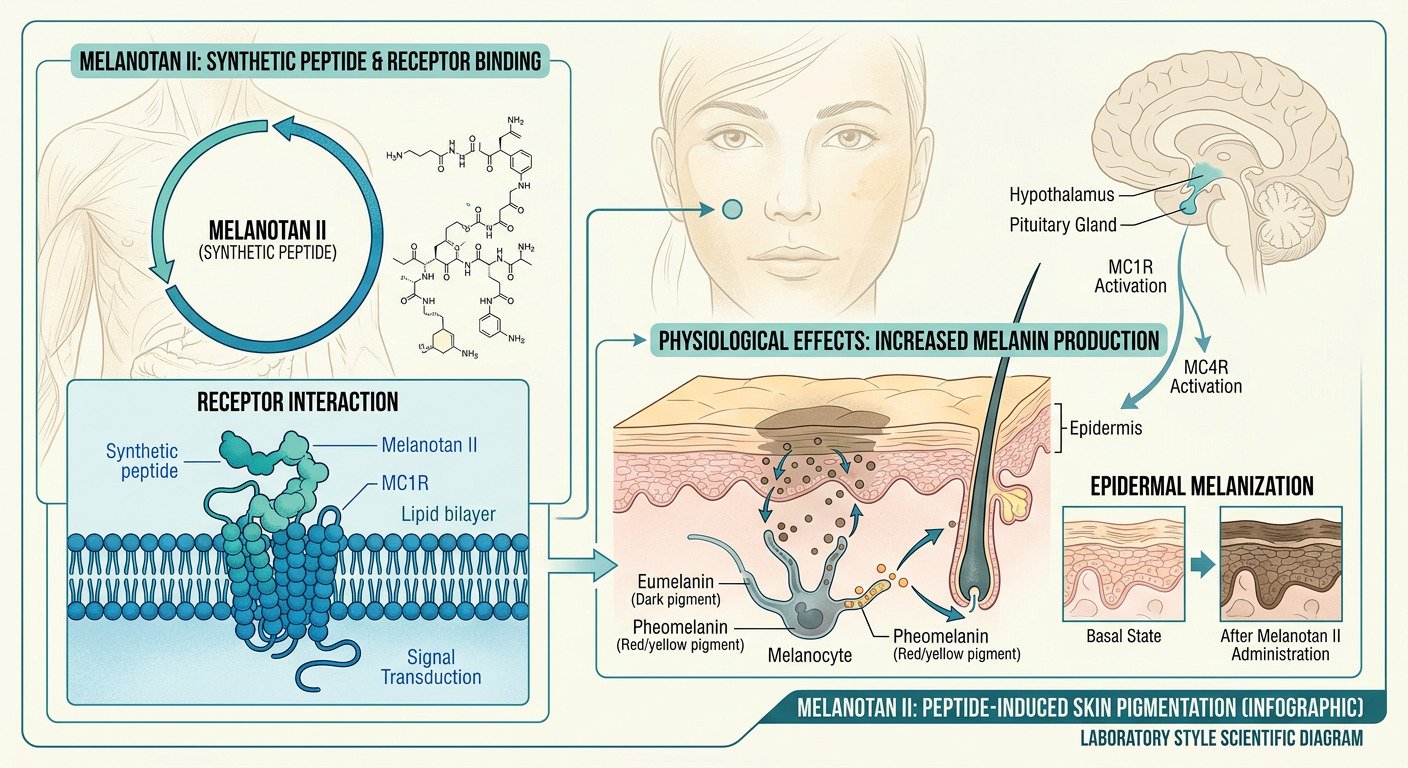
The biology of skin color centers on melanin, a pigment produced by specialized cells called melanocytes. Peptides that interact with this system have drawn scientific interest for their potential to stimulate melanin production without sun exposure.
How Pigmentation-Related Peptides Are Believed to Work
Research suggests that pigmentation-related peptides may influence skin color through several mechanisms:
- Melanocortin receptor interaction: These peptides may bind to melanocortin receptors, which are involved in regulating skin pigmentation and other biological processes.
- Stimulating melanin production: By activating these receptors, pigmentation-related peptides may encourage melanocytes to produce more melanin, the pigment responsible for skin darkening.
- UV protection potential: Because melanin naturally absorbs ultraviolet radiation, researchers have explored whether increased melanin production could offer some protection against UV exposure.
What Research Has Found
Studies on pigmentation-related peptides have explored their potential effects on:
- Skin pigmentation and tanning
- Potential UV protection
- Related pigmentary conditions
While some findings have been reported, robust human clinical trials remain limited. More research is needed to fully understand the effects, safety, and appropriate applications of these peptides in humans.
Current Status
Pigmentation-related peptides are not approved by the U.S. Food and Drug Administration (FDA) or the European Medicines Agency (EMA) as cosmetic or medical treatments. Regulatory agencies have noted safety concerns associated with some compounds in this category. The legal status of these peptides varies by country, and individuals should be aware of the regulations in their jurisdiction.
Key Takeaways
- Pigmentation-related peptides are studied for their potential to influence skin color.
- They are believed to work by interacting with melanocortin receptors and stimulating melanin.
- Research has explored their effects on pigmentation and UV protection.
- Regulators have noted safety concerns, and they are not approved treatments in the USA or EU.
- Anyone considering peptides should consult a qualified healthcare professional.
This article is for educational purposes only and does not constitute medical advice. See our Disclaimer for more information.